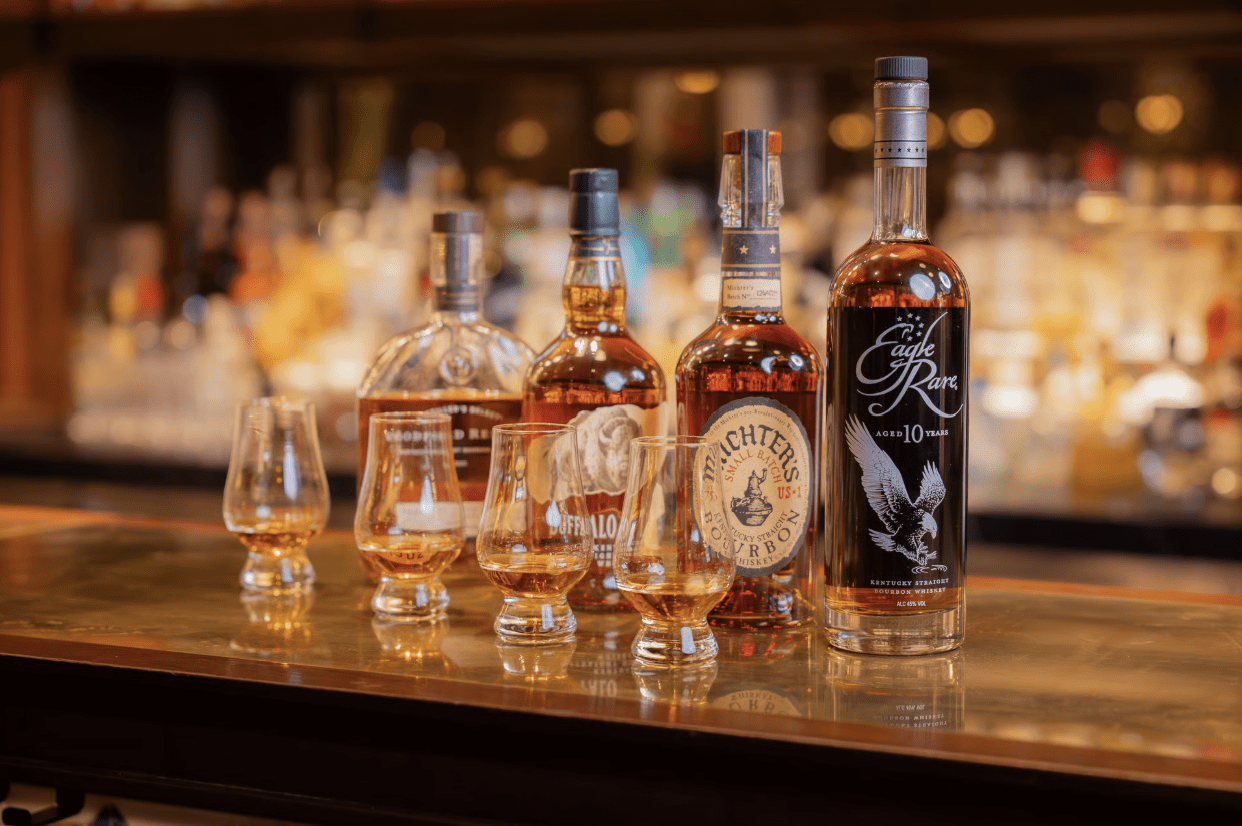
There’s a reason that bartenders reach for this bottle before anything else behind the bar. It’s not flashy, it doesn’t come in a wax-dipped decanter, and it doesn’t carry a four-figure resale label.
But Eagle Rare Bourbon 10 Year Whiskey boasts one of the most loyal followings in American whiskey. After all, it has been consistently excellent year after year.
If you’ve spent time perusing bourbon forums or standing in front of a liquor store shelf wondering if this one is worth the hunt, you’re not alone.
In this Eagle Rare bourbon 10 year whiskey review, we’re going to look at what’s actually in the bottle, what it tastes like and if it deserves a spot in your collection.
What Eagle Rare Actually Is
Eagle Rare was born in 1975 under different ownership, but the version on shelves today is unrelated to that original release.
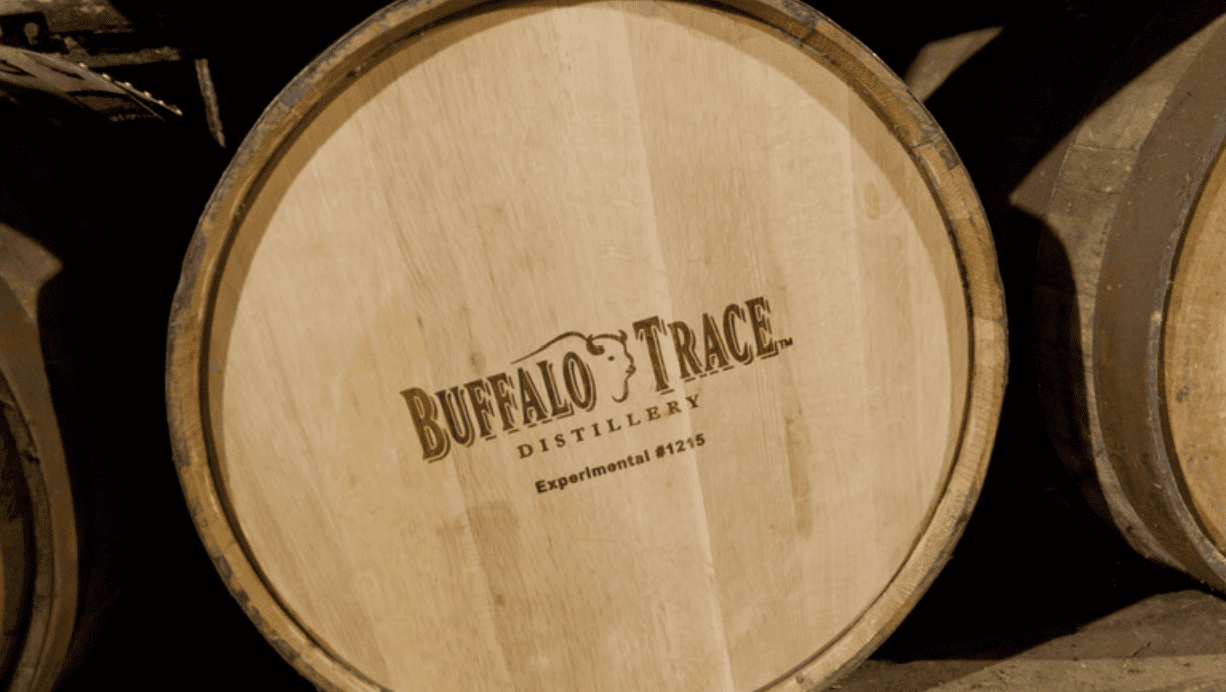
Buffalo Trace Distillery in Frankfort, Kentucky acquired the brand in 1989 and turned it into the 90-proof, 10-year-old bourbon it is today.
That’s a crucial distinction. A lot of the brand’s reputation, the patience, the barrel selection, and the consistency come from what Buffalo Trace has done with it over the past few decades.
This isn’t a limited-run, small-batch oddity. Even when produced at real scale, each bottle of Eagle Rare Bourbon 10 Year Whiskey still has a full decade of aging before it’s deemed ready. That’s longer than most bourbons on the market ever see.
The Mash Bill and Why It Matters
Eagle Rare is distilled from Buffalo Trace’s Mash Bill #1, a low-rye recipe the distillery has never published in exact percentages. Publicly we know it’s corn-forward, rye is under 10% and a small bit of malted barley finishes it off.
This mash bill also supports several other Buffalo Trace releases, including the standard bourbon and a few more expensive varieties. The shared DNA explains why fans of one tend to like the others, but after ten years in the barrel, Eagle Rare distinguishes itself from its less expensive siblings.
Aging Process
Kentucky’s seasonal temperature swings send barrels through repeated cycles of expansion and contraction. This pushes the spirit deeper into the charred oak, pulling color, sugars, and flavor compounds out along the way.
That’s a whole decade of that cycle. That’s enough to iron out the kinks you’d see in a younger bourbon without crossing the line into the heavy, dry oakiness that can take over much older releases. It’s a sweet spot, and Buffalo Trace knows it.
Nose, Palate, Finish, and Mouthfeel
Pour yourself a glass and the first thing you’ll notice is toffee, layered with orange peel and a faint herbal note underneath the sweetness.
The opening shows honey and leather, with a quiet trace of oak in the background rather than upfront. It is a welcoming nose, complex without asking too much patience of the drinker.
The palate goes towards dryness and boldness. You can smell the candied almonds a mile off, then there’s a lush cocoa note that gives the sip some depth. It’s not a sugar bomb like some bourbons with wheat can be; there’s real structure here, and the dryness keeps it all balanced.
The finish is long, drying rather than fading into sweetness, with oak asserting itself on the way out. As for mouthfeel, this is a fuller-bodied pour than you might expect from a 90-proof bourbon, with a richness and weight that punches above its proof point.
Best Ways to Drink It
Neat is the obvious starting point, and it’s where this bourbon shines brightest; give it a few minutes in the glass to open up before taking your first sip. If you find the oak too dry at first, a few drops of water or a single large ice cube can help to soften it slightly.
It also performs surprisingly well in a spirit-forward cocktail; a whiskey sour made with it allows the orange and almond notes to shine through nicely without being lost.
Who Will Enjoy This Bourbon
If you’re new to bourbon and want a lot of depth in a bottle without being overwhelmed, this is a good way to begin.
If you’ve been drinking bourbon for years and have gotten a little tired of overly sweet, corn-heavy releases, the dry, almond-and-cocoa profile here will probably feel like a welcome change of pace.
It is not the best option if you are after something sweeter and more dessert-like; there are other bourbons that fit that bill.
Is Eagle Rare Bourbon 10 Year Whiskey Value for Money?
This is where Eagle Rare Bourbon 10 Year Whiskey quietly wins. The Eagle Rare 10 year price sits at a suggested retail of roughly $38–$40, a genuinely strong number for a fully aged decade-old bourbon.
Compare that to most other 10-year whiskeys on the market, and you’re often paying double or more. The Eagle Rare whiskey price holds steady at that level when you can find it at retail, though that’s a bigger “if” than it used to be.
Is Eagle Rare 10 Year Hard to Find?
Here’s the honest answer to “Is Eagle Rare 10 year hard to find?” Yes, more often than not. This bottle has become a victim of its own reputation.
Word spread that you could get a genuinely well-aged, well-made bourbon for under $40, and demand climbed well past what Buffalo Trace’s production can currently keep up with.
Even at the distillery itself, visitors are limited in how often they can purchase a bottle. That scarcity is exactly why shoppers now search for Eagle Rare Bourbon 10 year whiskey for sale rather than expecting to just grab one off a shelf.
If you’re looking for an authentic bottle, you can find Eagle Rare Bourbon 10 Year Whiskey at A-Liquor, which takes a lot of the guesswork out of the hunt.
How It Compares to Eagle Rare 12 Year and Eagle Rare 17
Buffalo Trace does not have a standard 12 year Eagle Rare that they sell as a year-round retail item. Most references to it are to older or limited editions so check availability before you assume you will find one.
Eagle Rare 17, an annual addition to the Buffalo Trace Antique Collection, is better documented. That bottle trades on extreme scarcity and a much higher price, with a drier, more oak-forward profile that’s a testament to its extra years in barrel.
The 10 Year is still the one for everyday drinking and offers the best balance of quality and accessibility in the lineup.
Final Verdict
Eagle Rare 10 Year deserves its reputation. A decade of age, a well-balanced flavor profile of toffee, almond, and cocoa, and a price point that has not kept pace with how good it actually is; that is a hard combination to find anywhere else in bourbon right now.
Quality is not the issue; availability is. Our product page is a great way to check availability and buy a bottle without wasting your weekend driving from store to store.
If you were looking for a real bottle of Eagle Rare 10 Year Bourbon, this is one of the few times the hype and the whiskey actually match up.
There’s a reason that bartenders reach for this bottle before almost anything else behind the bar. It’s not flashy, it doesn’t come in a wax-dipped decanter, and it doesn’t carry a four-figure resale label.
But Eagle Rare Bourbon 10 Year Whiskey boasts one of the most loyal followings in American whiskey because it has been reliably, consistently excellent year after year.
If you’ve spent time perusing bourbon forums or standing in front of a liquor store shelf wondering if this one is worth the hunt, you’re not alone.
In this Eagle Rare bourbon 10 year whiskey review, we’re going to look at what’s actually in the bottle, what it tastes like and if it deserves a spot in your collection.
What Eagle Rare Actually Is
Eagle Rare was born in 1975 under different ownership, but the version on shelves today is unrelated to that original release.
Buffalo Trace Distillery in Frankfort, Kentucky acquired the brand in 1989 and turned it into the 90-proof, 10-year-old bourbon it is today.
That’s a crucial distinction, because a lot of the brand’s reputation, the patience, the barrel selection, the consistency, comes entirely from what Buffalo Trace has done with it over the past few decades.
This isn’t a limited-run, small-batch oddity. Even when produced at real scale, each bottle of Eagle Rare Bourbon 10 Year Whiskey still has a full decade of aging before it’s deemed ready, longer than most bourbons on the market ever see.
The Mash Bill and Why It Matters
Eagle Rare is distilled from Buffalo Trace’s Mash Bill #1, a low-rye recipe the distillery has never published in exact percentages. Publicly we know it’s corn-forward, rye is under 10% and a small bit of malted barley finishes it off.
This mash bill also supports several other Buffalo Trace releases, including the standard bourbon and a few more expensive varieties. The shared DNA explains why fans of one tend to like the others, but after ten years in the barrel, Eagle Rare distinguishes itself from its less expensive siblings.
Aging Process
Kentucky’s seasonal temperature swings send barrels through repeated cycles of expansion and contraction, pushing the spirit deeper into the charred oak and pulling color, sugars, and flavor compounds out along the way.
That’s a whole decade of that cycle, enough to iron out the kinks you’d see in a younger bourbon without crossing the line into the heavy, dry oakiness that can take over much older releases. It’s a sweet spot, and Buffalo Trace knows it.
Nose, Palate, Finish, and Mouthfeel
Pour yourself a glass and the first thing you’ll notice is toffee, layered with orange peel and a faint herbal note underneath the sweetness.
The opening shows honey and leather, with a quiet trace of oak in the background rather than upfront. It is a welcoming nose, complex without asking too much patience of the drinker.
The palate goes towards dryness and boldness. You can smell the candied almonds a mile off, then there’s a lush cocoa note that gives the sip some depth. It’s not a sugar bomb like some bourbons with wheat can be; there’s real structure here, and the dryness keeps it all balanced.
The finish is long, drying rather than fading into sweetness, with oak asserting itself on the way out. As for mouthfeel, this is a fuller-bodied pour than you might expect from a 90-proof bourbon, with a richness and weight that punches above its proof point.
Best Ways to Drink It
Neat is the obvious starting point, and it’s where this bourbon shines brightest; give it a few minutes in the glass to open up before taking your first sip. If you find the oak too dry at first, a few drops of water or a single large ice cube can help to soften it slightly.
It also performs surprisingly well in a spirit-forward cocktail; a whiskey sour made with it allows the orange and almond notes to shine through nicely without being lost.
Who Will Enjoy This Bourbon
If you’re new to bourbon and want a lot of depth in a bottle without being overwhelmed, this is a good way to begin.
If you’ve been drinking bourbon for years and have gotten a little tired of overly sweet, corn-heavy releases, the dry, almond-and-cocoa profile here will probably feel like a welcome change of pace.
It is not the best option if you are after something sweeter and more dessert-like; there are other bourbons that fit that bill.
Is Eagle Rare Bourbon 10 Year Whiskey Value for Money?
This is where Eagle Rare Bourbon 10 Year Whiskey quietly wins. The Eagle Rare 10 year price sits at a suggested retail of roughly $38–$40, a genuinely strong number for a fully aged decade-old bourbon.
Compare that to most other 10-year whiskeys on the market, and you’re often paying double or more. The Eagle Rare whiskey price holds steady at that level when you can find it at retail, though that’s a bigger “if” than it used to be.
Is Eagle Rare 10 Year Hard to Find?
Here’s the honest answer to “Is Eagle Rare 10 year hard to find?” Yes, more often than not. This bottle has become a victim of its own reputation.
Word spread that you could get a genuinely well-aged, well-made bourbon for under $40, and demand climbed well past what Buffalo Trace’s production can currently keep up with.
Even at the distillery itself, visitors are limited in how often they can purchase a bottle. That scarcity is exactly why shoppers now search for Eagle Rare Bourbon 10 year whiskey for sale rather than expecting to just grab one off a shelf.
If you’re looking for an authentic bottle, you can find Eagle Rare Bourbon 10 Year Whiskey at A-Liquor, which takes a lot of the guesswork out of the hunt.
How It Compares to Eagle Rare 12 Year and Eagle Rare 17
Buffalo Trace does not have a standard 12 year Eagle Rare that they sell as a year-round retail item. Most references to it are to older or limited editions so check availability before you assume you will find one.
Eagle Rare 17, an annual addition to the Buffalo Trace Antique Collection, is better documented. That bottle trades on extreme scarcity and a much higher price, with a drier, more oak-forward profile that’s a testament to its extra years in barrel.
The 10 Year is still the one for everyday drinking and offers the best balance of quality and accessibility in the lineup.
Final Verdict
Eagle Rare 10 Year deserves its reputation. A decade of age, a well-balanced flavor profile of toffee, almond, and cocoa, and a price point that has not kept pace with how good it actually is; that is a hard combination to find anywhere else in bourbon right now.
Quality is not the issue; availability is. Our product page is a great way to check availability and buy a bottle without wasting your weekend driving from store to store.
If you were looking for a real bottle of Eagle Rare 10 Year Bourbon, this is one of the few times the hype and the whiskey actually match up.